Radar

Configurable Pseudo Noise Radar Imaging System Enabling Synchronous MIMO Channel Extension

Configurable Pseudo Noise Radar Imaging System Enabling Synchronous MIMO Channel Extension

Bräunlich, Niklas and Wagner, Christoph W. and Sachs, Jürgen and Del Galdo, Giovanni.

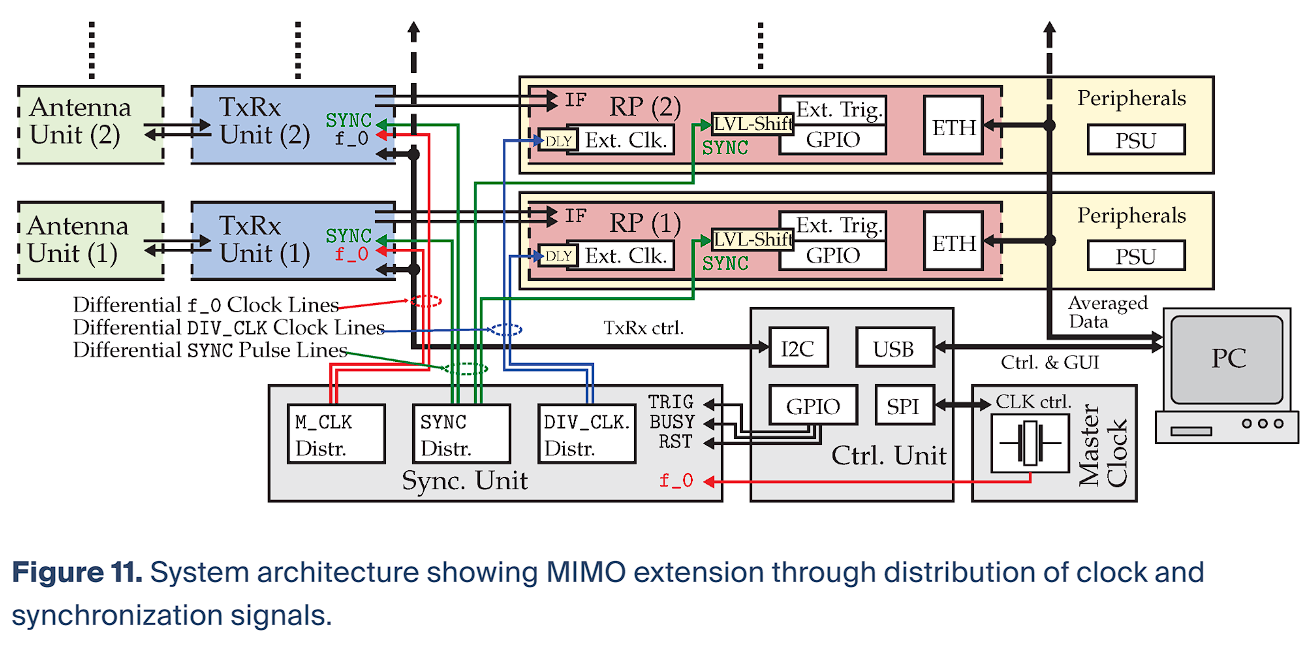
In this article, we propose an evolved system design approach to ultra-wideband (UWB) radar based on pseudo-random noise (PRN) sequences, the key features of which are its user-adaptability to meet the demands provided by desired microwave imaging applications and its multichannel scalability. In light of providing a fully synchronized multichannel radar imaging system for short-range imaging as mine detection, non-destructive testing (NDT) or medical imaging, the advanced system architecture is presented with a special focus put on the implemented synchronization mechanism and clocking scheme. The core of the targeted adaptivity is provided by means of hardware, such as variable clock generators and dividers as well as programmable PRN generators.

The Theory of Finite Fields for Optimized Compressed Sensing Schemes

It has been shown1 that Linear Feedback Shift Registers (LFSR) can serve as a Radar sensor by random demodulation that enables significantly lower data-rates than dictated by the Nyquist-Sampling Theorem. At the same time they can be implemented very efficiently in silicon, while still allowing high configurability. This makes this approach a prime candidate for a wide range of Radar and inspection applications, but it requires a thorough study of the resulting theoretically achieveable performance.

Oryx: Multi-node Radio Channel Sounding for UAVs and Ground-stations

Oryx: Multi-node Radio Channel Sounding for UAVs and Ground-stations

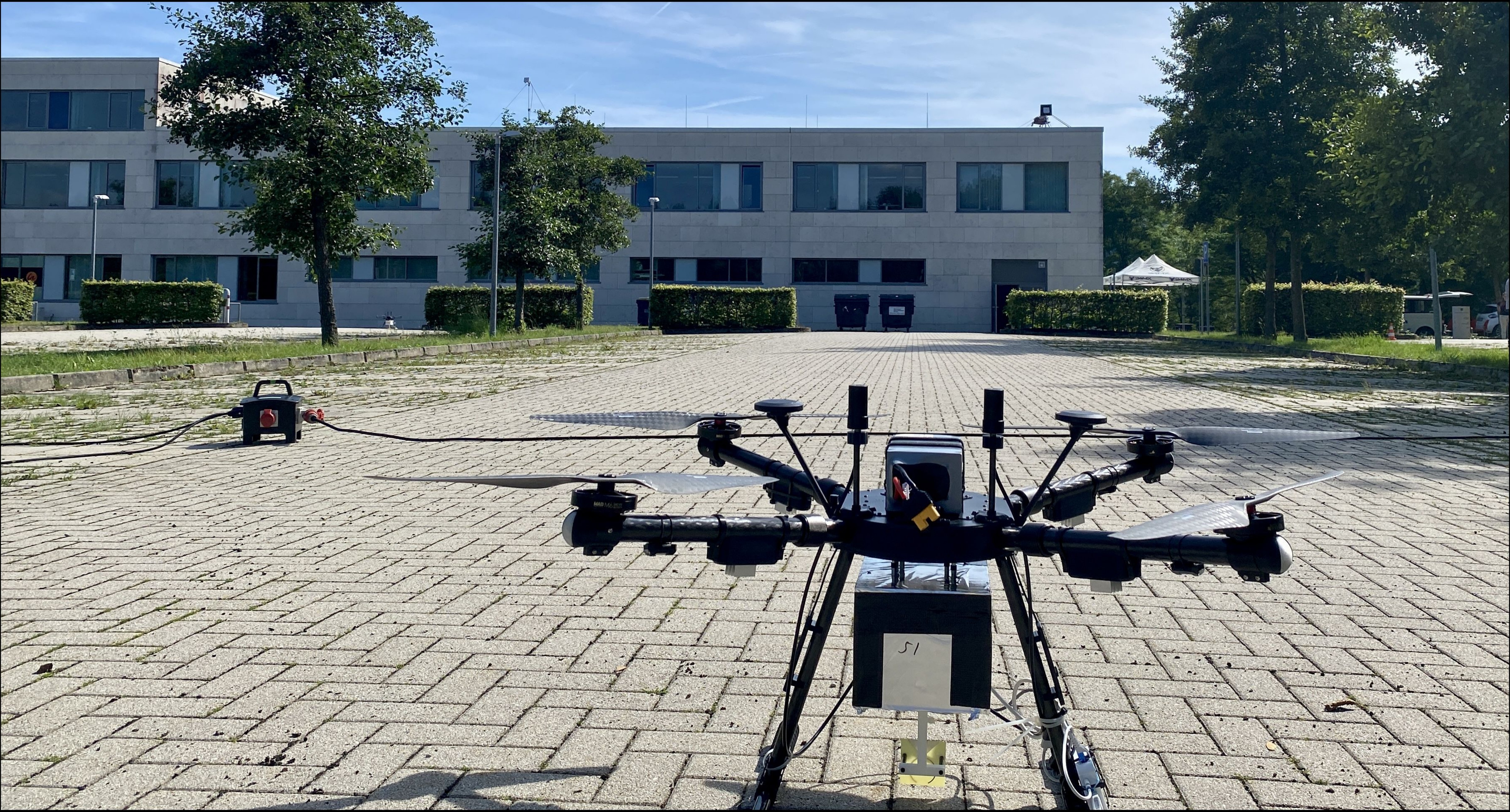
The Oryx dataset contains radio channel measurements between stationary (ground- and rooftop-mounted) and mobile (UAV- and vehicle-mounted) transceivers in a multi-static setup. A variety of dynamic passive objects were present in the measured scenarios, allowing for verification of radar detection, estimation and tracking algorithms. In addition to the measured channel frequency responses, the position of all radio nodes and passive objects were recorded using high-accuracy GNSS RTK devices.